The decision that matters most on a commercial door is repair versus replace, and it usually comes down to the curtain or panel steel rather than the hardware. Springs, cables, endlocks, guides, bottom bars and…
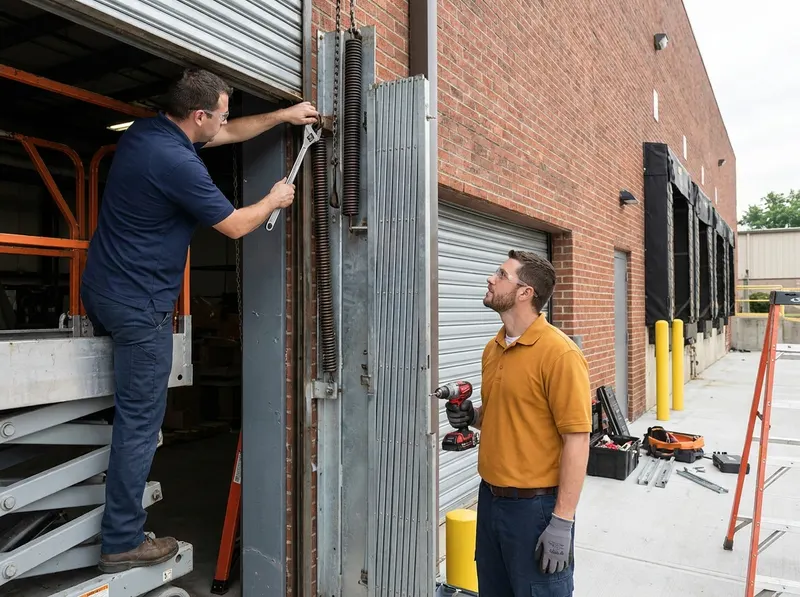
The decision that matters most on a commercial door is repair versus replace, and it usually comes down to the curtain or panel steel rather than the hardware. Springs, cables, endlocks, guides, bottom bars and operators are all serviceable parts — replacing them on a sound curtain is almost always the cheaper path and gets the opening working the same day. When the curtain itself is deformed across many slats from a forklift strike, or the bottom several feet have rusted through, the honest answer is that patching buys months, not years. A door that has been hit hard enough to bend the guides usually needs guide straightening or replacement along with the slats, because a bent guide will chew up a new curtain. We say which situation you're in before quoting, not after.
Little Ferry's commercial door stock takes specific abuse. The warehouse and shop blocks along Redneck Avenue and the industrial stretch toward the Meadowlands wetlands edge sit low and damp, and the bottom bars and lower slats on rolling steel doors there rust from the inside out where water sits against the astragal. Buildings along Marginal Road and the Hackensack riverfront edge get the same problem plus wind loading that pulls endlocks and wears the guide legs. Rust at the bottom bar is the single most common reason a Little Ferry rolling door starts binding, because a swollen or pitted bottom bar no longer tracks straight into the guides. On the Main Street business district storefronts and the Bergen Turnpike corridor, the more frequent calls are rolling grilles and small service doors that have been cycled thousands of times a year — those fail at springs, chain hoists and worn barrel bearings. Near the Little Ferry Circle at Route 46 and the truck routes feeding it, impact damage from tight backing maneuvers drives the slat and guide work.
Diagnosis follows the symptom. A rolling door that will not stay up, or that drops fast when released, points to lost tension in the barrel springs — that is an adjustment or a spring replacement inside the barrel, not an operator issue. A door that lifts crooked or binds on one side points to a broken lift cable, a slipped drum on a sectional, or debris packed into one guide. An operator that runs while the curtain sits still usually means a stripped chain, a failed coupling, or a sheared key. Springs and curtain tension on commercial doors are stored energy and are not a DIY adjustment — a barrel spring under load can injure someone badly. If a door is stuck open and the building is exposed, tell us on the call; securing the opening is the first move even when the full repair needs an ordered part.
Parts reality on commercial work is worth stating plainly. Common springs, cables, endlocks, bearings, weather seal and operator hardware are stock items we carry or source locally through Bergen County suppliers. Custom curtain sections, oversized dock door panels, non-standard grille links and some specialty operators are ordered to size, which adds lead time — we tell you the wait up front instead of promising same-day on a part that does not exist on a shelf in New Jersey. Every quote is a ballpark until the door is measured and opened up; the exact number is confirmed on-site at the free visit, and the $300 service minimum applies to any commercial dispatch.
Every job gets a firm, written price after a free on-site visit.
Tell us about your commercial overhead and rolling steel door repair job in Little Ferry and we'll send a clear, written quote — usually the same day.
 Span Garage Door's Repair Experts